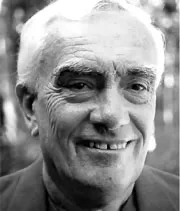
Tony Stevenson
The recent advent of futures to business, government and community must gratify the pioneer futurists, even if practice does not always meet their various ideals. Some, notably Jim Dator and Eleonora Masini, have lived to see certain of their aspirations for futures studies realised. With the late Bertrand de Jouvenals, Robert Jungks and John McHales, they had hoped futures could bring better ways of being and doing — from personal growth to product development, from public policy to global ethics.
The practical—and ethical—application of futures studies has been the core work of American sociologist and futurist, Wendell Bell. While others have published much in the field, it is Bell who has married a comprehensive explanation of the field, at least in the Western world, to a rationale for applying empirical futures research. His main life’s work, Foundations of Futures Studies: Human Sciences for a New Era [1], in two hardback volumes, is a cornerstone of what he believes is one of the most important movements of the last half of the 20th century.
Perhaps only one other, Australian futurist Richard Slaughter, has sought to con solidate a body of futures knowledge. His Knowledge Base of Futures Studies [2] is an edited four-volume collection. Unlike Bell, Slaughter acknowledges diverse futures methodologies, yet he recognises Bell’s work as a landmark in futures scholarship.
In Foundations, Bell [1] (p. xix-xxiv) sets out to show that futures studies is both an identifiable sphere of intellectual activity making important contributions to the knowledge base of modern society, as well as a body of sound, coherent thought to underpin a serious course of study. Thus he had intended to create a teaching instrument especially in colleges and universities. Also, he had wanted to “futurise” specialists’ thinking in other disciplines. And he had hoped it would provide tools to “empower both ordinary people and leaders to act in order to create better futures for themselves and their societies than they otherwise would be able to do”.
Thanks to Bell and a range of other scholars, researchers and teachers, the notion of futures (plural) is now fairly common currency around the industrialised world and in parts of the developing world. It implies a potential array of different futures for any given horizon. Which future eventuates depends on present choices, decisions and actions. The future is not preordained. We can help create it, at least partially.
According to Bell [1] (p. xxv), futures studies offers hope for humanity’s future and concrete ways of realising that hope in the real world of our daily lives. He wants to share that hope, to encourage using futures studies in the public interest, and to share the sense of excitement and adventure that comes from transforming such hope into effective acts that create the future. From early in his career, he has sought to understand the social underside—how despair and alienation, and thus social action, are the expression of having no desirable or tolerable future [3].
More recently, he struggles with the big issues for creating better futures, for example: the eternal conflict between good and evil; the clash of civilisations and universal human values; and the world as moral community. The seeds were sown when he studied English for his first degree at the University of California, Fresno.
He did some writing and acting. Once he had read John Dos Passos’ trilogy
and most of the remaining Modern Library series, he was thoroughly committed to trying to eliminate injustice and cruelty and to changing the world for the better.
1. Practical futures studies
The common thread to Bell’s work remains: how we act on and about the future. By stark contrast to his thinking on policy and ethics, some of his early practical applications now appear trite. He had not been consciously doing futures studies when he played a role in inventing the frozen orange juice concentrate that replaced the canned product just after the Second World War. The young navy pilot was topping up his war service stipend as a teaching assistant and graduate student at the University of California, Los Angeles (UCLA), having moved there from Fresno in 1949. Working as a part-time interviewer and he had helped survey people’s purchases of orange juice.
In another survey, he had asked men about their likes and dislikes of summer suits. There followed an entirely new genre of summer suits, tailored from new materials, lightweight, cool and wrinkle-free.
With hindsight, from the vantage of a formidable specialist in foresight, he sees these early studies as examples of deliberate, goal-oriented research on small, specific issues about preferred futures. They informed industry’s research, development and planning that brought them into being.
Bell has always welcomed opportunities for policy research and for applying futures knowledge to help create better ways, for example:
- helping design an exhibit on the future for the State Museum of Indiana;
- consulting the US Commission on National Security for the 21st Century;
- evaluating pollution controls in the US, Canada and Mexico;
- advising the Institute for Global Ethics in its continuing advocacy for ethical behaviour by individuals, institutions and nations;
- investigating ways of keeping nuclear waste sites safe from inadvertent human intrusion for 10,000 years;
- evaluating the promotion of culturally appropriate dispute settlements for the Hawaiian judiciary; and
- serving on the Commission for Connecticut’s Future, and dealing with some future-oriented policies.
With a reputation as a futurist, the US government consulted Bell and others to try to profile the Unabomber, who mailed explosives to his victims. The Unabomber had wanted to unravel modem technology and return society to more primitive ways. Bell analysed his long treatise attacking technology, Industrial society and its future. The Federal Bureau of Investigation had hoped he could help figure out the writer or who might know the writer. Bell was challenged by the intellectual problem. And one of his colleagues at Yale University had been disabled permanently by a mail bomb.
To Bell, this was a policy matter: How do you stop terrorism? The Unabomber was a terrorist. He harmed mostly strangers who, except in the Unabomber’s own jaundiced mind, were innocent of any wrongdoing.
Bell and others advised that the treatise be published. Thus the FBI learned the author’s identity. Bell’s profile turned out to be “pretty good”, but had pegged the Unabomber to be younger than he was.
2. Futures of evil
Wendell Bell thinks terrorism helps create disorder, undermines trust and threatens the functioning of social institutions. He says the US has been learning this since September 11, 2001. Ironically, the same government did not seek his advice when, early in 2002, President George W. Bush hoisted the notion of an Axis of Evil to the global agenda.
Only ten months before September 11, Bell [4] had suggested how some principles of futures studies could help people learn to restrain their evil acts. Foresight encour ages people to consider the future consequences of their actions, an inclusive ethic inviting objective appraisal of those consequences without demonising one’s opponents. (He says the Bush administration’s rhetoric had used evil to demonise the “other” in order to justify its interpretation of events and its responses.) Bell argues that a critical realism — the basic epistemological framework for his futures thinking — would help people question their own beliefs.
He is now working on the problem of evil, especially where people harm others while believing they are doing what is good and right. This newer interest is not truly separate and distinct from his futures work. Rather, it continues his ongoing inquiry into human values and the good society of the future. To understand good, he thinks we also need to understand evil.
Then, “there is the puzzle of the mental gymnastics” when people transform their own violent and harmful acts into praiseworthy, righteous acts. How can they believe some ideology or god sanctifies them when, in fact, they are committing the most horrible aggression and violence against others?
His challenge is to understand and explain such beliefs. But the hard part is to find some antidote, some effective solution in truth and reason that will allow, even force, people to see their own harmful acts for the wrongs they really are. How do we help people change and embrace the truly good and decent in themselves? How do we allow them to see that destructive revenge breeds more destructive revenge; that, through cooperation, generosity, and mutual understanding, a world of peace and justice for everyone is possible?
Such inquiries are a work in progress and, hopefully, another book.
3. Influencing the future
Meanwhile his Foundations of Futures Studies has affirmed his enviable stature. To Richard Slaughter, it has foundational significance for developing futures studies as an applied and intellectual discipline. Anita Rubin, a Finnish futurist, calls Foundations “The Bell bible”. Her Ph.D. thesis is firmly based on Bell’s work. Particularly
influential was his paper, ‘The Sociology of the Future and the Future of Sociology’ [5], which she says connects both fields.
Hawaiian futurist and political scientist, Jim Dator, declares, “If Wendell Bell had not existed, the futures community would have had to invent him”. Bell adds stature in every way: he is tall, handsome, debonair, and well and soft-spoken, he teaches at Yale.
Although Dator had known of Bell since discovering futures studies in the late 1960s, they first met in 1978 at a conference, The Future of Corrections. Terrorism was a topic, “lest anyone think concern about terrorism is new to futurists or to the law enforcement community”.
Bell and others had spoken about young men of color being vastly over-represented in all aspects of the US criminal justice system. From arrest, to denial of parole, to recidivism, a young man of color was more likely to be involved than someone with any other demographic characteristics. “Being a good sociologist”, says Dator, “Wendy carefully demonstrated it defied all laws of statistical probability that these facts could have happened by chance. Significant bias had to be operating all along the way”.
Bell suggested judges should apply affirmative action and equal opportunity when sentencing. Each judge should have a list of the guilty defendants and another list of the kinds of people under-represented in prison. Defendants of an under-represented class should be imprisoned to help fill the quota.
Dator said Bell’s idea met all the aspects of a good futures suggestion, combining hard facts, thought-provoking forecasts and creative solutions. Needless to say, it went nowhere. Young men of color are still vastly over-represented in the American criminal system. Old white men go free.
Dator finds only one drawback to Wendell Bell. He is a sociologist! “But he is a futurist. One of the first. One of the best. One of the longest running”. Even many cultural critics in futures studies would agree.
4. Object or subject?
In his Foundations, Bell clearly has little time for postpositivist, poststructuralist thinking. Futurist cultural critics such as Ziauddin Sardar and Sohail Inayatullah go unmentioned, except for one reference to the latter on a non-theoretical topic. Although Bell has travelled far beyond his home country, he could be more truly global if not so tightly confined by its American origins.
A critical realist, Bell seeks to ground his interpretive work in “firm evidence”. This distinguishes him not only from the cultural critics but also from the number crunchers who feed their observations into predictive models.
He admits postpositivism has helpfully corrected an uncritical acceptance of positivist science but to him, in the extreme, it is false. It provides little basis for knowl edge, much less a basis for a future- and action-oriented field such as futures studies. “Some writers have concluded that all thought would be brought to an end if the postpositivist program were taken to its logical conclusion. Not only would causality, determinism, necessity, objectivity, and rationality be abolished, but also humanism, liberal democracy, responsibility, truth itself and, we can add, futures thinking” [1] (p. 236).
Is this a hangover from the functionalist-structuralist battles in the history of sociology? Or is it because he is a social scientist with an unswerving attachment to objectivity? Or both?
“Yes, I consider myself a scientist,” he says. Much of his early work was collecting, organizing, analysing, and interpreting social data. His aversion to “the ineffable” began in high school when he tested for extrasensory perception in hundreds of experiments. “I really started out believing in it, but empirically found that it didn’t exist — at least in me or in any of my hundreds of subjects.” He worries about believing in propositions that are truly false and, acting on them, damaging himself or others. Thus, he tries to be skeptical.
He proposes critical realism as an appropriate theory of knowledge for futures studies. To him it is a post-postpositivist and post-Kuhnian epistemology, part of the larger humanistic culture of critical discourse. It synthesises some aspects of older positivist views with some of those of the newer postpositivist philosophers. In the latter case, it includes the claim that plausibility, not absolute certainty, is the most that can be claimed for scientific endeavour.
Critical realists embrace an external reality, independent of human mind, that can be known objectively. Conjectural knowledge is possible and is often beyond reasonable doubt if it remains unrefuted after serious efforts to falsify it. Critical realists assert that rival hypotheses often can be refuted. But it is necessary to assume causation, including the purposive behaviour of individuals and social groups.
Although futures studies is devoted to the future, Bell sees it as necessarily concerned with much that is part of the past and present, since each bears on the future. The past and the present, of course, have a reality that the future does not share. Unlike the future, they are evidential, they did or do exist. Thus, futurists can study them scientifically as critical realists. So, futurists face the same threats to the validity of their assertions as do other scientists. Since it is based on fallibilism, critical realism claims only a knowledge that is conjectural and that incorporates justified beliefs about the future.
Bell suggests that many criticisms of science and rationality can be misplaced. They suffer from a misunderstanding of science. They defeat themselves by rejecting rationality. Untenable positions are held, often rejecting truth, science and rationality. Assertions and propositions are made which readers or listeners are expected to believe as true. This creates paradoxes. For example, no generalizations are true — including that one!
5. Critical realism
As a critical realist, Bell tries to be skeptical about all assertions. The US National Research Council recently reviewed hundreds of scientific studies in a given field. It concluded that 70 percent were worthless. The data and analyses failed both to
support the authors’ conclusions and to allow the rejection of any competing hypotheses or explanations. But science and rationality were not to blame, he says. A lot of scientists do not know how to put a proposition at risk in the conduct of an empirical study. “Their shoddy work needs to be exposed.”
One of his Ph.D. students, James William Gibson, wrote The Perfect War: Techno war in Vietnam [1] (pp. 218-19), a devastating and tragic critique of the “scientific” management methods used by the Americans in Vietnam. Secretary of Defence, Robert S. McNamara, had brought cost-benefit analyses and production quotas from the Ford Motor Company.
The “incompetent—even stupid”—managers in Vietnam did not properly understand the limitations and flaws of these methods. If they had been skeptical, they soon would have realised they were getting false data, such as the inflated body counts.
Bell’s work adds the term critical to realism. But for cultural critics, the futures critique must go much further, including of course into the cultural realm. For Sohail Inayatullah, Bell has constructed a “wonderful ladder” for climbing over the myopic, realist approaches to futures studies based on forecasting. But he says Bell does not challenge the strategic and empiricist assumptions of political and social life. He does not go far enough. There are more steps ahead, as well as “snakes and gardens”.
“For me”, says Inayatullah, “while it [critical realism] questions the empirical, it does not foundationally challenge it. I would prefer to see futures created from a range of multiplicities: the ecological, the multicultural, the gendered, the Gaian. Certainly Bell is sensitive to this but would resist this postmodern thrust as nihilistic”. Inayatullah prefers a layered, epistemological approach for critique and for transformation. It would include the empirical with the ideational, the systemic with the metaphorical. There is room for the real and the spiritual. “What then is really real?” he asks.
What Bell may have in common with the cultural critics, and the people such as Inayatullah, who go further, is an interest in changing the future. Bell sees futures studies as “action science”; Inayatullah as “action learning”.
Bell favours activism, too. His only proviso is that activism be guided by reliable and valid knowledge. He likes Donald Campbell’s [6] idea of the society where planned change is considered an experiment, outcomes are assessed, and feedback for decision making is used to plan still more effective, efficient, and equitable action in an unending experimental effort to tune and retune plans, policies, and implementations. Sound knowledge and good practice inform and correct each other.
According to Bell, futurists are interested in making social action more intelligent, informed, effective, and responsible. Although they may spin dreams of the future to help orient that action, they are obliged to seek the truth. “For intelligent, informed, effective and responsible action requires reliable and valid descriptions of present realities and reliable and valid knowledge of causes and effects”, he says. “It requires, too, assertions about the future that are warranted. Futurists, therefore, function as scientists as they attempt to fulfill the knowledge needs of futures studies”.
6. Scientific futures studies
It is not surprising that Bell is a man to look up to—he is tall—and an idol of the “scientific” futurists, those trained in the social sciences. Inayatullah has a follow ing among futurists mainly from the humanities. Each is a product of his back ground—Bell of the American sociologists and Inayatullah of the French poststruc- turalist philosophers and Johan Galtung, a scholar in futures and peace studies. There is a chasm between some of the scientific futurists and certain (cultural) critical futurists in the academic world, leading sometimes to bitter personal feelings.
It is a face-off between the supremacy (sometimes in the absolute) of objectivity versus subjectivity, with few accepting that both offer helpful ways of understanding the world. However some cultural critics do call on empirical data as needed. But this still falls far short of a methodological pluralism. It has to be asked, here: Can any single methodology, no matter how powerful, fully and accurately engage reality?
Thus, when reading Foundations of Futures Studies, do not expect any explanation of cultural-critical futures studies. Even in dealing with the notion of human values, Bell has gone to some lengths in the second volume to find how to make value judgments objectively; how values can be objectively tested and validated. Bell admits in Foundations [1] (p. 321) that it was an unorthodox belief at the time of writing, countering the dominant academic dogmas. While there was reluctance in the scientific and scholarly community to accept his view, he believes an objective basis for values will eventually prevail.
“For I have seen that it works”, Bell said, “that it can be taught to others, and that there are signs of change, both among scientists and philosophers”. Also there is a growing recognition of the common need to find some objective and universal procedures for resolving conflicts without using force, especially among peoples of different cultures. “Most important, perhaps, are scholarly honesty, trust in rationality, and public verifiability. Although there are lags, if a view is right, eventually it will overturn even long-held and cherished belies.” He points to the delay of the Catholic Church in acknowledging Galileo, but believes his belief will be accepted more quickly.
Certain scientists, including Edward O. Wilson [7], have suggested an empirical, biological basis for culture and human behaviour, including ethics. The internecine warfare over the sociobiology of Wilson and others may have abated somewhat but the questions, rightly, remain about the relationship of cultural and biological evolution. It is interesting that Donald Campbell’s [6] (pp. 413-463) evolutionary epistemology is bringing evolutionary biology and evolutionary psychology into vogue. And there is heated dispute over the extent to which culture modifies sources of natural selection in some form of coevolution or co-direction [8].
7. Values and the future
Bell’s interest in human values appears in his Ph.D. thesis at UCLA: A comparative study in the methodology of urban analysis. He traced social trends and social choice by analysing census tract statistics for Los Angeles and the San Francisco Bay Area, comparing different methodologies for constructing social areas. This sensitised him to patterns of change through time, and in people and societies choosing their futures from a range of possible alternatives. He worked with his own sample surveys when he went to Stanford in 1952 as assistant professor of sociology, and then at Northwestern as associate professor from 1954-57.
His interpretive framework queried what had drawn urban dwellers to the suburbs. He was dealing with alternative possibilities, images of the future, choices, decisions, values and preferences — all variables that are part of futures studies, although he did not realise it then.
Among other things, his work in urban research refuted elite and snobbish intellectual judgments of the suburbs in the 1950s. People liked the suburbs. They found much of what they were seeking when they moved there. There was no evidence of “split-level headaches”, “cracks in the picture windows”, “slurbs” or the “eclipse of community”.
His interest in values may have begun earlier, in his undergraduate English at Fresno State where he had wanted to change the world. He wanted to write, “like John Steinbeck’s The Grapes of Wrath or Sinclair Lewis’s Main Street or some muckraking expose of some rotten industry like Upton Sinclair’s book on the meat packing industry”. But he had to make a living too. He ended up in graduate school in sociology at UCLA on the advice of a Fresno English professor who told him his field was bankrupt. At UCLA he soon learned “do-gooders” were unwelcome. The highest calling was to make sociology a science. By then, a wife and a child helped him choose. And a messianic, intense enthusiasm among his teachers for creating a true science of society had rubbed off on him.
8. Avowed universalism
Working with values in a social science, it is not surprising that Bell seeks to judge values objectively. And he believes in the universality or near-universality of human values. He questions two major tenets of cultural relativism: ethical relativ ism; and an enthusiasm for cultural diversity, especially when it is thought so great that comparing cultures is virtually impossible or meaningless. For him, both are flawed.
For him, a culture does not always contribute to survival or make a population flourish. Contrary to some long-standing assumptions among anthropologists, traditional beliefs and practices sometimes produce fear, violence, suffering and even murder. For example, clitoridectomies involve mutilation and child abuse. “All values, including yours and mine, can be — and ought to be — questioned”, he says in Foundations [1] (p. 322).
As for cultural diversity, he concludes that the world’s cultures have a great deal in common with one another. Their values range from respect for life, honesty, truth, loyalty, trust, courage, and freedom to peace, health, love, kindness, generosity, self-control and moderation.
His attack on relativism and subjectivism is determined, advocating their replace ment with critical realism among the changes he advocates for sociology [9]. This would overcome the unwarranted certitude of positivism, Bell believes. He also wants to bring moral discourse back into sociology, expand the discipline’s scope globally and increase its relevance to all living human beings. He would like to see sociology become an action science and the concepts of expectation, choice and decision included in the definition of society. And he seeks to infuse futures thinking into sociology.
Not surprisingly he advocates a code of ethics for the behaviour of futurists them selves. At the end of Foundations [1] (pp. 331-223) he suggests a Pledge to Future Generations because “he cares deeply about humanity and its future”. And he does his best to live up to the principles in this pledge. These include: caring for future generations; choosing work that contributes positively to humanity; helping halt environmental deterioration; stopping population growth; opposing all war, terrorism and violence; supporting the advance in children’s health and wellbeing; enhancing cooperation among diverse cultures; understanding our place in the universe; upholding human rights and civic participation; and experimenting with forms of governance.
9. A life’s work
All this underscores the very personal nature of Foundations. It was very different from his earlier The Sociology of the Future: Theory, Cases and Annotated Bibliography [10], although this was widely quoted, announcing his arrival to futures studies as coeditor with James Mau. Bell wrote the first words for Foundations in Australia in January 1985 on arriving for a six-month visiting fellowship at the Australian National University, Canberra. He wrote every single day until mid-July when he and his wife, Lora-Lee, toured from Sydney right up the East Coast to Cairns. He had written five long chapters and presented two seminars at the Institute of Advanced Studies. They loved Australia and enjoyed a rewarding social and intellectual experience. He feels he never would have finished the two volumes without this great start. And Lora-Lee helped and encouraged him to persist.
Bell began phased retirement from Yale in 1991 and did little more than work on the manuscript. He redoubled his efforts on retiring in 1995. Towards the end of 1996 Foundations was published in two volumes, with a copyright date of 1997. It had cost him both lost income and opportunities to do many other things.
His long journey in futures continues among eminent scholars as a senior research scientist in Yale’s new Centre for Comparative Research. He joined Yale as professor of sociology in 1963.
It was about 1958 when he became aware he was explicitly studying the future. He was surveying the new leaders in the Caribbean for their images of their emerging states. He began writing about national leadership. Although a number of futurists have written about leadership, including Bert Nanus, Bell thinks it is still somewhat neglected by the futures community.
Bell began his national-leadership research in Jamaica where he had spent the summer of 1956, without intentions of doing anything more. He extended it to most of the new Caribbean states, helped by a grant. The Carnegie Corporation had helped establish a West Indies Studies Program at the UCLA, where he had returned as associate professor of sociology in 1957. On extended Caribbean visits until the mid- 1980s, he gathered data for a number of publications, including Jamaican Leaders
[11] and The Democratic Revolution in the West Indies [12]. He went back years after his original research to ask Caribbean leaders how the subsequent realities had matched their earlier expectations and goals.
10. Personal influences
But Bell’s journey towards futures’ scholarship may have germinated way back in his childhood. As early as he can remember, reading was a “magic door into other worlds”. It promised unlimited possibilities. While the world of everyday life was unhappy for most people during the depression, he was largely unaware of it. He had friends his own age, went to school and ran around the neighbourhood playing cops and robbers, cowboys and Indians, or imagining the futurist worlds of Buck Rogers or Flash Gordon.
In 1928 he was living in Chicago with his mother in one household and his grand mother in another. Each had saved up to leave their respective husbands. His authoritarian father, a travelling salesman, squandered his good money. After plotting and saving, and when he was four, the two women took him to live in Fresno, California. His mother went out to work. She liked a good time and got the nickname Bobby in Chicago having been among the first to “bob” her hair. His warm, loving grand mother stayed home and read him books.
Women have been important in Bell’s. He met his wife, Lora-Lee, when “this gorgeous young woman” walked into a political science class, looked around, and sat among the five veterans. By June 1947 the two had married. After well more than 50 years together, Wendell says of Lora-Lee: “She is loving, steadfast, cour ageous, curious, life-affirming and constantly learning. Most of all she is original and creative. She is also a master teacher”.
They spent more than 20 years with horses, training for dressage, cross-country and stadium jumping. Lora-Lee made riding, horse-care and bam management enjoyable for her students. Wendell had listed over 50 ways horses communicate, planning a book. He was beaten to the post when The Man Who Listens to Horses was published, revealing many more ways than he had counted.
When they quit the horse business in 1985, Lora-Lee began concentrating on her art. She is now a professional artist and teacher. He changed from an “ignoramus” about painting and sculpture after being “dragged through many galleries and museums” over their decades together. Inspired, he has tried to apply her creative thinking to his own teaching, but admits he is too over-organised and straight-jacketed by logic to succeed in the way she does.
Daughter, Karen, with three grown children, gives her parents security through
her love, friendship, care and understanding. Wendell wishes they both had spent a little more time “being there” for their own parents, especially as they aged. Karen, also artistic, sometimes joins Lora-Lee giving watercolour workshops. “Like my mother and me”, he says, “she [Karen] is hard working and strong-willed”.
Son, David, said at age seven he would have a life in the theatre. He was not discouraged; they thought it would go away. He wrote and acted at school, majored in drama at college and then taught theatre. But he came to realise the theatre is not at university but out in the real world. Now his craft brings David a good living, but he, also, is working far too much. He has written about 50 plays, mostly musicals, and has been artistic director of Ford’s Theatre, Washington. He has had works performed overseas and has put on plays in the Reagan White House, giving an entree to his parents for presidential receptions.
Daughter, Sharon, taught humility. She had a stormy teenage. At 20 it was found she had a condition that attacked not only her brain but also other organs. After bouts in and out of college she eventually found some stability married to a man who also had mental problems. They managed two decades together until she died last year in (June 2001). “We learned from Sharon, too”, says Bell. “She helped us understand that hope and happiness were possible even in circumstances that to us seemed dreadful. We had to learn there were things we simply could not do anything to change, try as we might”.
Today, hardly stooping under his years, Wendell Bell exudes a humble self-confidence. He is still a man to look up to. A great many people, including futurists, do just that, in more ways than one.
So, what did he envision for his own future as a young navy pilot, flying out from Palawan Island? He had tried to get into the Pacific war but was told to come back at 18. He got to train as a naval cadet but by the time he graduated as a junior lieutenant, the war was over. He was sent to the Philippines, which had experienced the biggest sea-air battle of the Pacific. He flew patrols searching for downed aircraft and winged it into typhoons about 250 metres above the water, circling the storm’s eye, and gathering and sending back data.
At one time, he had hoped to make a decent living as an airline pilot. He also vaguely wanted to be a writer, especially of novels. And he had fantasies of becoming a movie actor. Being at Raenford Military Academy had brought him close to the Hollywood movie business.
Did he then have clear and distinct images of the world’s future? “I suppose I assumed that it would continue in peacetime as it had before the war, but some what — if not immensely — better, newer, richer, faster, shinier, sleeker, and more abundant. Pretty naive!”
References
- Bell W. Foundations of Futures Studies: Human science for a new era. New Brunswick: Trans action, 1997.
- Slaughter R, series editor, Knowledge base of futures studies, 1-4, CD. Indooroopilly: Futures Study Centre, 1999.
- Bell W, Meier D. Anomia and differential access to the achievement of life’s goals. American Sociological Review 1959;24:189-202.
- Bell W. New futures and the eternal struggle between good and evil. Journal of Futures Studies 2000;5(2):l-20.
- Bell W. The Sociology of the Future and the Future of Sociology. Sociological Perspectives 1996;39(1):39—57.
- Campbell D. Evolutionary epistemology. In: Schilpp P, editor. The philosophy of Karl Popper. La Salle: Open Court; 1974. p. 413-63.
- Wilson E. Consilience: The unity of knowledge. London: Little Brown, 1998.
- Laland KN, Odling-Smee J, Feldman MW. Niche construction, biological evolution, and cultural change. Behavioral and Brain Sciences 2000;23:131-75.
- Bell W. The sociology of the future and the future of sociology. Sociological Perspectives 1996;39(1):39—57.
- Bell W, Mau J, editors. The sociology of the future. New York: Sage; 1971.
- Bell W. Jamaican leaders: Political attitudes in a new nation. Berkeley and Los Angeles: University of California Press, 1964.
- Bell W, Oxaal I. Decisions of nationhood: Political and social development of the British Caribbean. Denver: Social Science Foundation, University of Denver, 1964.
World Futures Studies Federation, PO Box 188, Noosa Heads, Australia, * Tel.: +61 7 5447 4394; fax, +61 7 5448 0776. E-mail address: tony.stevenson@wfsf.org (T. Stevenson).