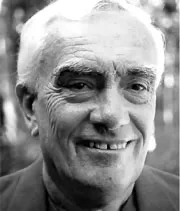
Accusations of calling myself a futurist were levelled at me recently by my friend, Merrill Findlay, of Imagine the Future, a non-governmental organization in Melbourne, Australia. She believes everyone is a futurist because we all make sense out of our world by, among other things, imagining the future.
Whether or not one agees with Merrill, I still believe that far too few of us, including our so-called leaders, have an interest in or a need to look very far into the future. For example, a colleague, Bob Dick, who has long been doing outstanding work running futures search conferences that set his clients7 horizons five years out, does not call himself a futurist. But he recently told me he would reconsider encouraging organizations and communities to think much further ahead in order to enhance their choices of strategic action, as a result of attending a futures studies workshop at Southern Cross University, Lismore.
So, my answer to Merrill goes something like this. While all, or many, of us take the future into account in making sense of our lives, futures studies encourages us to look
ahead 50, 100 years, or even further, to consider the long-term consequences of our decisions. It seems clear to me that few people think that far ahead. Yet, we can expect significant change only if we reimagine our institutions a generation or so into the future. In this way, we can work backwards from future visions of more appropriate institutions to make choices and take actions today to form pathways to those visions.
My discussion with Merrill has reinforced my preference to avoid using titles and exclusionary descriptors, such as futurist. But, whether or not one agrees with Merrill, I certainly am happy to list myself as an Earth-citizen interested in futures studies. Maybe that is a more appropriate description of my interests than being a futurist. Futures studies is an enquiry into how myself and others create, anticipate, envision or otherwise think about our alternative futures.
Thinking about who is and who is not a futurist has reinforced another belief: that futures-oriented thinking is better infused into other forms of working, living, learning and caring than being used as some discrete activity. Among other things, it would avoid the problems associated with the use of the words futures. To some it means trading prospectively in gold or pork bellies. To others it is a vague distraction from the burning problems of the present, and therefore of virtually little interest. Once the much-quoted Western year 2000 is past, we will no longer be able to use the term 21st century studies, so we’ll have to become creative in trying to incorporate the notion of envisioning alternative futures into other concepts. It is easy to see why Tae-Chang Kim, Allen Tough and others have chosen the idea of future generations.
Starting in futures
It is not surprising that I ended up in futures studies. In my youth, and much later, I was impatient with the ‘imperfections’ around me and could hardly wait for the realization of my utopian dreams. Now, after some rich experiences of life around the planet, my visions are less idealistic, though fortunately still informed by some useful idiosyncratic thinking. And I am increasingly being drawn to a mindfulness of the present, enriched by my visions, something I do not find contradictory nor inconsistent with futures-oriented thinking, as I explain below.
It turned out that this dreamer was lousy at prediction, at prophesying. My dreams, as daydreams not visions, rarely came true, at least in specific terms. If they had, I would have been a bishop, or a general, or someone famous. It took me almost four decades to see the futility of fame, power and fortune. In fact it was about the time that I met Jim Dator in Hawaii and got interested in futures. I was also learning about epistemology and the culture-blindness of our meaning-making.
I had deliberately ended a career in business and returned to academia in mid-career, something I would never have foreseen when, a few years after leaving secondary school, I had become disenchanted with both academia and my ability to be academic. I had chosen to throw in my part-time study in journalism and get on with a practical life.
Now that I have certain academic responsibilities, I remain disenchanted with academia for another reason, in particular the way its institutional culture demands academics to be self-serving and steeped only in what has already been ‘revealed’. Academia demands that its careerists concentrate on building a traditional curriculum vitae at the expense of nurturing their clients, the students and the community, for which they were supposed to generate new knowledge.
Journey to futures
For me, the journey to futures took quite a while, via journalism, public relations and public affairs, and probationary enrolment in postgraduate study, without that elusive first degree in arts/journalism. But I had been accepted, provisionally, by an understanding University of Hawaii (UH). There I studied communication management. My adviser in the Master of Arts (Communication) programme had encouraged me to choose electives outside my department. She said I could even study the future with the radical, but visionary, Jim Dator over in Political Science.
It seems that I am a late learner. It took until 1988, ten years after graduating from UH, to invite Jim to Australia for a symposium, ‘Australia’s Communication Future’, in Brisbane. He said I should also ask Eleonora Masini. My interest in futures was instantly rekindled. I joined the World Futures Studies Federation (WFSF) and registered for the world conference at Beijing the same year.
In 1992, in Barcelona, my WFSF friends cautiously chose me as secretary-general. I took over from my Finnish friend, Pentti Malaska, at a conference in his home town, Turku, in 1993. Pentti is now president for the same term, until the world conference in my home town of Brisbane in 1997. We work in the awesome shadow of Eleonora and Jim.
Futures now
I now work, also, with people such as Sohail Inayatullah, Kathleen Rundall, Zia Sardar, Azizan Baharuddin, Rick Slaughter, George Anguilar, Miguel Patolot, Qin Linzheng, Merryl Wynn Davies, Felix Marti, Tridip Suhrud, Cesar Villaneuva, Levi Obijiofor and Kate Miller to increase multicultural collaboration in the WFSF network and to encourage new people, preferably the young, into the field. Education is a key area of concern.
I have come to realize that daydreams, as utopian thinking, have to be treated with caution. Rather than use them for longing, they can help us to more playfully envision in a space where new idiosyncratic ideas can emerge free from the rationalism of the conscious brain/mind system. Idiosyncratic ideas, when practically refined, often translate into useful evolutionary change, providing we are vigilant for crazy ideas such as Adolf Hitler had.
The big lesson for me has been that futures-oriented thinking, in its various forms, is about the here and now. As well as history, futures thinking helps to inform and interpret the now in which choices are made about decisions and actions that affect the future.
A significant part of my personal future looks like being spent living, hopefully in mindfulness, in subtropical rainforest near the surfing beaches around Noosa. It will be a varied present, my future, enriched by my visions of alternative futures for the extended global community in which I am trying to participate as fully as circumstances allow.
Before 1997, when the Brisbane conference will reinvent the tired business of conferencing, I should have coordinated more courses and workshops, written much more than I had been able to before recently leaving the city for the rainforest, and expanded my work in communication futures at the Communication Centre, a research unit, at the Queensland University of Technology, Brisbane.
Future futures
What lies beyond 1997 is, of course, difficult or impossible to predict. But I hope that WFSF has become even more of a process than an institution. And I dream that the so-called revolution in communications and information technologies will have begun to empower a more decentralized world which is even more diverse. But, since my daydreams are rarely as prophetic as my intuition, I think we had better prepare for what I intuit, at least for the next generation. This would be a world closer to what Kerry Stokes (in the Boyer Lectures) called a suburb of Los Angeles where, as certain other like-minded people have said, the communications and information industry itself will be the virtual government.
However, my intuition also suggests that, in the longer term, there will be an increase in personal empowerment and social networking. 1 am prepared to work to turn these dreams into shared visions with many others who believe, that, at least after a generation or so, we can see a cleaner-greener world eventuate.
I foresee my becoming involved in envisioning such futures with communities, including my own at Boreen Point near Noosa, both in local and global dimensions. Particularly, I am concerned for communities to learn their responsibilities to themselves and others, including those who will follow, so that they can take wider responsibility for the consequences of their decisions and actions.
It is not my intention, working as I do around the world, to colonize futures studies for the middle-aged West, but to have helped to encourage the further development of indigenous forms of future-oriented thinking in partnership with my friends. I also hope to have engaged some of the leading business and political policy makers in multidisciplinary and intergenerational conversations with people concerned for future generations.
We need to make wise choices about originating change. Our choices must not harm others, nor separate them from their own or others’ becomings. We need to be creative and caring.
Once, it would have been tempting to say that I can hardly wait for the future. But, I have learned, after all this time, that the future is now, is now . . .
Tony Stevenson is Secretary-General of the World Futures Studies Federation. He may be contacted at the Communication Centre, Queensland University of Technology, Box 2434, Brisbane, Queensland 4001, Australia (Tel: +61 7 3864 2192; fax: +61 7 3864 1813).