In Sohail Inayatullah, editor, The Views of Futurists, Vol 4 of the Knowledge Base of Futures Studies. Brisbane, Foresight International, 2001.
Some mornings I emerge from the relative comfort of an increasingly less secure cocoon – the part-time place where I live when forced to work in the city of Brisbane – to see a neighbour rushing off in a leased BMW, or a gleaming new Japanese coupe or a luminous pastel-coloured Korean sedan. Into the immediate future. Is she thinking of the new-release sports car, the coming lunch-time over sun-dried tomatoes and other fashionable specialties on foccacia or panini (actually the Italianate fad is fast fading), discussion of the price-earnings ratios of stellar corporate shares and investment opportunities gone sour in East and South East Asia; then, perhaps dinner over a bottle of good Australian white wine? Will the slightly-longer-term future mean a vacation to Turkey or Uzbekistan, the currently fashionable destinations?
But, do such contemporary Australian middle-class corporatist suburbanites realise how their understandings of their world are being skewed by such trappings, only to be enslaved by the rich and influential? Like the less well qualified work force, these street lieutenants of the new capitalism are now being exposed to new forms of corporatised violence in terms of competition for employment and promotion, and onerous workloads and other institutional demands which threaten their physical, psychological and spiritual viability. As a futurist I often wonder whether my neighbour, and others like her, ever stop to actively consider the consequences of today’s living; to interrogate their own alternative futures. Do they really believe that the competitive global market place will provide for their advancing years? Do they believe, as Rupert Murdoch once said, that the emerging communications and information technologies will bring peace to the world, or something like that?
And, do they give a fig for the people in the non-industrial world struggling to find a bowl of rice and some good cooking oil because the owners of capital are controlling even the local market? What do they care for future generations in any country, even their own? Again, as a futurist, I wonder what access such people have to critical/analytical futures thinking, whether they know about it and, if so,
whether it appears as yet another example of arcane philosophy. In the case of a wide spread concern for nature, it was only after environmental activism emerged from the academic theorising of ecology that people began to take an interest in disposing of their waste and greening their own backyard. It seems that futures activism – active advocacy for futures thinking and future generations – has yet to emerge from futures studies with similar intensity.
One outstanding example of contemporary futures activism is to be found in the teaching of futures studies in schools and universities. In the Russian Federation my colleagues are actively advocating future scenarios to their president. Japanese industries envision 50 and 100 years into the future.
Meanwhile, activism in ecology and political protest certainly advocates better futures for coming generations. But futures studies is much more, especially when it anticipates alternative futures a generation or even several generations into the future, and links local with global and the universe. Wider futures activism would empower people to envision alternative institutions and ways of living, integrating new forms of governance, economics, social structure, culture and human ethics with the natural ecology. It would consider the consequences for local communities of the emergence of interactive digital communications, space travel, genetic engineering and nanotechnology. Such visions, when backcast, give new
meaning to present practices, problems and opportunities, bringing new choices for decision and action in the present.
There are examples of active futures thinking, even if not always longer term, at Noosa, in my own back yard so to speak. At my “real” home by the national park, beside one of my world-favourite beaches, the local council uses roundabouts instead of traffic lights. Building is limited to a height of four levels to minimise spoilage of the attractive local landscape. A cap has been put on population growth in the new strategic plan. And local environmentalists have strategies for monitoring the council’s decisions and taking into account the longer-term effects. But, I still see examples at Noosa of the great economic divide. There are those, perhaps like my Brisbane neighbour, who envisage Noosa’s future as a real estate market with endless opportunities to build new apartments, new resorts and new shopping centres. These people welcome any increase in tourism as an expansion for the local market. New wealth, they seem convinced, will be delivered by free- market trade in goods and services, now partly mediated as electronic commerce on the Internet.
Such a technocratic, bricks-and-mortar world view is vigorously opposed by others at Noosa who, while often still interested in accumulating capital, have found what is left of the region’s natural delights. Following either a heightened or new-found concern for nature around them they have come to resent the advent of the tourist
seasons. Visitors descend from far away to idolise the endangered koalas and other wildlife, trampling down the once-living earth in an avalanche of branded
sneakers, gold-tipped black and white couture, perfumed suntan oil, and an endless parade of surfboards, when the surfs up. And, I almost forgot, the koala’s modem enemies: the car and domestic dog.
Last year Fatma Aloo, a journalist from the Tanzanian island of Zanzibar, visited my Noosa home. She confronted me with my vast privilege. She made me consider that studying the future can be an elitist endeavour when people in Africa do not even believe they have a present, let alone a future. Have they any apparent incentive to envision their futures? Then, again last year, I went with Cesar Villanueva to a fishing village on the west coast of the Philippines island of
Negros. His Balayan project in practical development economics has been helping the village people fight the organised illegal fishing which threatens their present and their future. Uninvited, invasive fishing has destroyed many of the natural
coral reefs and is still threatening their dependence on local seafood for subsistence living. The Balayan project is also helping the villagers reclaim the coastal mangroves neglected by immediate-past generations whose social alienation had lost their traditional respect for the local ecology. This in a country which has lived
at gun point under European and then American colonisation, only to suffer the imposition of martial law from within, and the more recent oppression from security guards of powerful feudal land owners. A village fisherman was murdered not long after my visit.
The Philippines acts as a powerful reminder for me, a resident of an Australian resort village, of the insidious world-wide creep of the kind of future that the corporatised world wants to impose. At New Year, I left behind at least two Australian shopping centres backgrounded in the wallpaper sounds of Kenny Gee on the saxophone. Then, I heard the same refrain in Manila, and again at the new shopping centre in provincial Bacolod City where, incidentally, panini had just arrived. Now, I do not think my Filipino futurist friends should be denied whatever joy there may be in panini, or Kenny Gee for that matter. But panini, which justify getting a higher price from humble bread rolls made of refined white flour, lack the nutrition of traditional rice. Then, on my return to Australia, I heard the intemationally-ubiquitous Kenny Gee yet again, first at a coffee shop, and then in my dentist’s chair. Can this be the future?
It was a significant shock for me to be reminded only recently, again by Cesar, that the insights of futures thinking really need to be brought to the mainstream of issues confronting the world today. Consider cultural hegemony, for example.
Sure, cultural invasion is in the critical literature of futures studies. But, are the local implications of such issues obvious to non-futurists? Are Filipino fisherfolk, who cannot afford to travel to shopping centres overseas, denied the opportunity to critique the implications of the spread of panini and Kenny Gee? What are the implications for Bacolod City of such cultural hegemony? Almost certainly it will change personal and community identity, apart from threatening the local culture.
For that matter, what are the implications for my suburban neighbour in Brisbane? Does she think about such longer-term matters as loss of cultural diversity?
For practising futurists, the question is: has contemporary futures studies developed the methodologies for helping interpret such issues for mainstream civilisation? Do our methods of alternative scenario building and backcasting genuinely engage the non-futurist in our society? Hardly. If the wider society is inadequately engaged in futures work, as is the case, it seems reasonable that we futurists need to find ways to interpret more directly the implications of trending and emerging issues for local citizens, not exclusively for scholars and others in the inner circle. How much of our writing ends up in accessible news bulletins, newspapers or magazines, compared with esoteric journals? What impact, if any, does our work have on policy makers? Not a lot, it seems.
I am not advocating an end to academic investigation and specialised publication, although critical of the unsubstantiated institutional focus on the latter. Good futures analysis, critique and comment do fall on appropriate ears and almost certainly have some eventual effect on students and thoughtful people with the time to read, and with an inclination and ability to scan the esoteric journals. But, as Cesar and I believe, respected organisations such as the World Futures Studies Federation must think through and then actively demonstrate how futures thinking can expand the search for alternatives to the prevailing paradigm. This really will make our futures work exciting, but also a bit controversial and dangerous. Yet is this not also at the heart of future studies, to make the future dangerous?’
The Federation was founded by people with a passion for activism. Bob Jungk, Mahdi Elmandjra, Eleonora Masini, Johan Galtung, to name but a few, personally challenged threats of nuclear war and political oppression. Jim Dator and others today do speak assertively to academic and lay audiences alike. Our challenge as futurists, surely, is increasingly to link careful analysis, creative imagining and critical long-term visioning, at least 50 to 100 years and beyond, to the lives of today’s citizens. We can work backwards from future opportunities unfettered by the constraints of those of today’s often-ailing and no-longer-adequate institutions, including the dominant global-market-place, economics-first paradigm. It just may be possible to find new insights for contending with the political, cultural and economic violence wrought on people barely struggling to survive in the non industrial world. They are far from a single modem to give them that much-hyped access to the global, digital economy, let alone a glimpse of what’s left of global cultural diversity.
There is a role for advocacy and activism in futures studies, I believe, to interpret the fruits of futures thinking for our neighbours, whether in economically impoverished circumstances or privilege. Thus, futures can give new meanings to the present. The line dividing poverty and privilege, developing and developed, is drifting from the so-called North-South divide to a transection across countries.
The advent of shameful deprivation and neglect in parts of Washington, D.C., and the growing number of street kids in Noosa, contrasted with the wealth flaunted on the new water-wasting golf courses of Asia, for example, all make the former categorisation less meaningful. In less than forty years, less than my very own life time, I have witnessed the drift. I’ll always remember first going to Russia, thirty years ago. Intourist guides kept de-clutching the engines of their battered cars to save fuel. And now it’s hard to count the Mercedes wasting fuel in the traffic jams that often ring Moscow.
While organised crime flourishes in the new just-do-it Russian market place following the end of the Cold War, political and cultural oppression continue not only in armed conflict but also in other forms of domination. I have witnessed it in my travels and, in Brisbane, personally experienced the cold night-time anxiety instilled by organisational violence perpetrated on blue-collar and white-collar workers alike. The rich and influential have appropriated the notions of managerialism and exclusionist-rational economics as institutional inventions and imposed them in the name of corporatisation, deregulation and privatisation.
Employees are being traumatised and casualised as work becomes scarcer, while corporate executives get obscenely richer on what amounts to an averaging down of the rate of pay for contracted work.
These diseases are not exclusive to the industrialised world. They are spreading in the name of globalisation. They eat at people’s very heart and soul. Is there anywhere to hide? What about the future? I plan to exit the corporatised world of the academy as soon as possible to advocate alternative futures. It’s time for action.
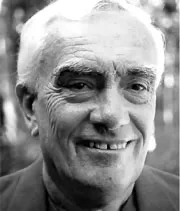
Tony Stevenson is president of the international non-govemment organisation, the World Futures Studies Federation (WFSF). He was director of the Communication Centre at the Queensland University of Technology, Brisbane, Australia, specialising in communication futures research and is now co-director of the Noosa Institute for the Future. After a stint in journalism, he journeyed towards futures studies as a consultant in organisational communication for strategic planning. Then he met Jim Dator in mid-career as a graduate student at the University of Hawaii and his dabblings in futures matured by the late 1980s. For WFSF, he conceived and directed courses in futures studies and was secretary-general from 1993 to 1997. He looks forward to helping take WFSF into the next century. He can be contacted at the Noosa Institute for the Future, PO Box 188, Noosa Heads, 4567. Australia. Tel: 61 7 5447 4394, 61 419 782 431. Fax: 61 7 5448 0776.Email: t.stevenson@qut.edu.au